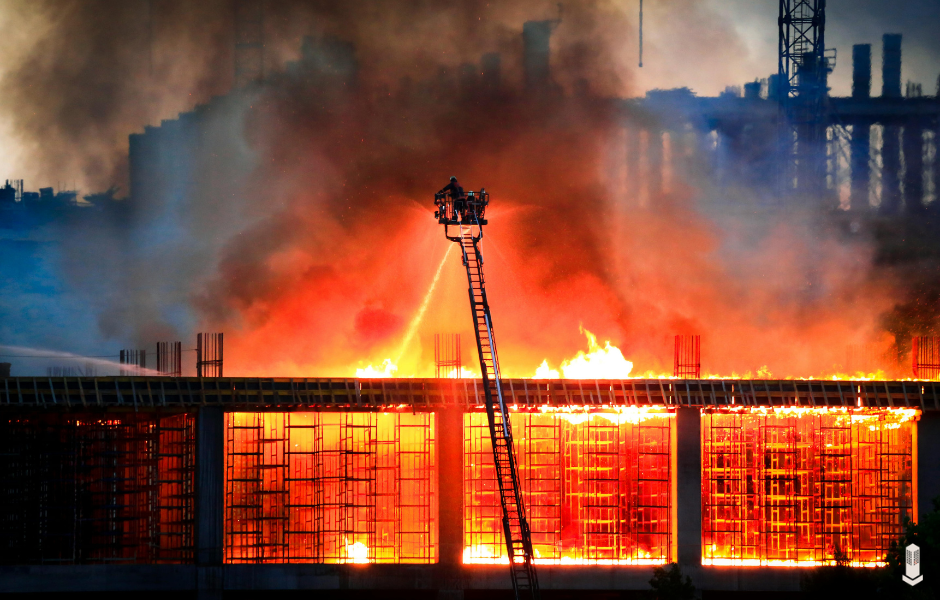
Building compliance requirements exist because of real incidents that demonstrate the consequences when safety systems fail. Recent events across New York City have reinforced why inspection deadlines, maintenance requirements, and professional oversight aren’t bureaucratic obstacles, they’re essential protections.
Recent Building Safety Incidents
Ann Street Parking Garage Collapse (April 2023)
A 98-year-old parking garage in Lower Manhattan’s Financial District suddenly collapsed when unauthorized demolition work removed a load-bearing pier without permits or engineering supervision. One person died and seven were injured. The subsequent investigation found 64 prior DOB violations dating back to 1976 and decades of unresolved structural deterioration. The tragedy led to emergency inspections citywide and enhanced parking structure inspection requirements.
Central Harlem Legionnaires’ Outbreak (Summer 2025)
Contaminated cooling towers caused 114 people to contract Legionnaires’ disease, with 90 hospitalizations and seven deaths. While the towers were technically compliant with then-current 90-day testing requirements, the outbreak demonstrated that quarterly intervals allowed dangerous bacterial growth between inspections.
Brooklyn Parapet Collapse (September 2025)
A rooftop parapet wall collapsed onto a worker at a one-story garage in Cypress Hills, Brooklyn, resulting in a fatality. DOB inspectors issued violations to the property owner for failure to maintain the structure. The incident occurred during routine work on the building.
Bronx Chimney Collapse (October 2025)
A massive 20-story brick chimney collapsed after an explosion in the boiler room of a NYCHA building in Mott Haven, sending tons of debris onto the sidewalk and playground below. While no one was injured, the building had active violations for unsafe facades dating to 2020, and the incident displaced 140 residents. The explosion occurred on October 1st—the day the city turns on heat for the season.
Bronx Apartment Building Explosion (January 2026)
A gas explosion sent fire through the top floors of a 17-story NYCHA building in the Bronx, killing one person and injuring 14 others. Firefighters were investigating reports of a gas odor on the 15th and 16th floors when the explosion occurred, causing major structural damage to approximately a dozen apartments and fires in 10 apartments across two floors.
Common Threads
These incidents share critical patterns:
Deferred maintenance compounds risk. The Ann Street garage had 64 documented violations over decades. The Bronx building that lost its chimney had unresolved facade violations from 2020.
Professional oversight prevents tragedies. Unauthorized demolition work without engineering supervision caused the Ann Street collapse. Inadequate testing intervals allowed the Legionnaires’ outbreak. Regular professional inspections catch problems before they become catastrophic.
Inspection cycles exist for reasons. Annual parapet inspections became mandatory because parapets fail. Monthly cooling tower testing replaced quarterly testing because people died during the gap. Parking structure inspections intensified because garages collapsed. Each requirement represents a lesson learned.
Violations signal larger problems. Buildings with documented violations often have undocumented deterioration. The DOB notices represent visible symptoms of broader maintenance neglect.
The Regulatory Response
The city strengthens compliance requirements whenever major incidents occur:
- Enhanced parking structure inspection programs
- Monthly cooling tower testing (Local Law 159) after the Harlem outbreak
- Annual parapet observation requirements citywide
- Intensified gas piping inspection programs
These are evidence-based responses to demonstrated risks. The regulations that feel burdensome today exist because yesterday’s gaps cost lives.
Understanding the Real Cost of Non-Compliance
Compliance costs seem significant until compared to the alternative:
Human cost: Lives lost, families devastated, communities traumatized
Financial cost: Emergency response, litigation, remediation, building closures
Operational cost: Evacuations, relocations, loss of use, tenant displacement
Reputational cost: Media coverage, regulatory scrutiny, liability exposure
The cost of monthly Legionella testing, proper structural inspections, or permitted engineering work is modest compared to the cost of a tragedy.
A Framework for Compliance
Buildings that successfully maintain safety compliance share common practices:
- They treat compliance as continuous responsibility rather than deadline-driven crisis management. Inspections are scheduled early in compliance cycles, not at deadlines.
- They invest in preventive maintenance. Addressing deterioration when inspectors first document it prevents catastrophic failure years later.
- They engage qualified professionals. Building systems are complex and require expertise to maintain safely.
- They maintain comprehensive documentation. When inspections, certifications, and corrective actions are organized and accessible, compliance becomes manageable rather than overwhelming.
Moving Forward with Purpose
At Prise, we work with property managers and building owners managing complex compliance calendars. We understand the administrative challenges: overlapping deadlines, contractor coordination, documentation requirements, budget pressures.
But we also understand why this work matters.
When we help schedule annual parapet inspections, we’re helping prevent facade debris from falling onto workers and pedestrians. When we track monthly cooling tower testing, we’re helping prevent disease outbreaks. When we coordinate parking structure assessments and gas piping certifications, we’re helping maintain safety systems that protect lives.
Recent incidents demonstrate that building failures have immediate human consequences in dense urban environments. Compliance isn’t about satisfying bureaucratic requirements or avoiding violations—it’s about maintaining safe structures where people live, work, and gather.
Prise helps property managers meet these responsibilities through comprehensive compliance tracking, deadline management, and organized documentation. We centralize all NYC building requirements, ensuring nothing falls through the cracks.
Because the consequences of neglect are too high to accept.
Building compliance protects lives. Let Prise help you maintain the safety systems that keep your buildings, tenants, and community safe.
Recent Comments